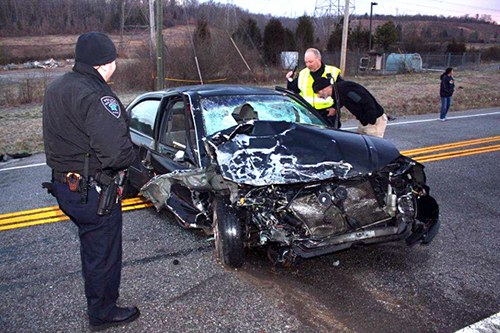
Head-on collisions are the deadliest type of motor vehicle accident. When two vehicles traveling in opposite directions collide front-to-front, the combined speed of both vehicles magnifies the force of impact. A crash between two cars each traveling at 45 miles per hour produces the same force as a single vehicle striking a fixed barrier at 90 miles per hour. The human body is simply not designed to withstand these forces.
While head-on collisions account for a relatively small percentage of all crashes, they represent a disproportionate share of fatal accidents. Understanding why these crashes happen, who is liable, and what legal options are available to survivors and families is critical.
Common Causes of Head-On Collisions
• Crossing the center line. Driver fatigue, distraction, impairment, or overcorrecting on curves can cause a vehicle to drift into oncoming traffic.
• Wrong-way driving. Impaired or confused drivers entering highways via exit ramps is a particularly dangerous scenario, often resulting in high-speed head-on impacts.
• Improper passing. Attempting to pass on two-lane roads without sufficient visibility or distance is a frequent cause of head-on crashes in rural Pennsylvania.
• Highway median crossovers. On divided highways, vehicles can cross the median due to loss of control, blowouts, or driver incapacitation, entering opposing traffic lanes.
• Road design defects. Missing center line markings, inadequate lighting, and the absence of median barriers on high-speed roads can contribute to head-on collisions.
Catastrophic Injuries in Head-On Crashes
The severity of injuries in head-on collisions is consistently higher than in other crash types. Occupants face traumatic brain injuries from the violent deceleration of the brain within the skull, spinal cord injuries that can result in partial or complete paralysis, crushing chest injuries including cardiac contusion and aortic rupture, multiple fractures throughout the body, and severe facial and dental injuries from airbag deployment and dashboard intrusion.
Fatalities are common in head-on crashes, particularly at highway speeds. Survivors often face months or years of medical treatment, multiple surgeries, and permanent disability.
Determining Liability in Head-On Collisions
In most head-on collisions, the driver who crossed into the opposing lane of traffic bears primary liability. This is generally straightforward to establish through physical evidence such as the location of debris, gouge marks on the road surface, and the final resting positions of the vehicles. As lawyers who represent injured drivers and passengers in Pennsylvania can attest, accident reconstruction experts play a critical role in head-on collision cases, using physics, vehicle damage analysis, and scene evidence to recreate the moments before impact.
However, liability can extend beyond the driver who crossed the center line. If a third vehicle forced the crossing driver into oncoming traffic, that third driver may share liability. If a mechanical failure such as a tire blowout or steering malfunction caused the driver to lose control, the vehicle or parts manufacturer may be liable. If poor road design contributed to the crash, the government entity responsible for the road may share responsibility.
Pennsylvania’s Comparative Negligence in Head-On Cases
Pennsylvania’s modified comparative negligence rule applies to head-on collisions. While the driver who crossed the center line typically bears the majority of fault, the other driver’s actions may also be scrutinized. Defense attorneys may argue that the oncoming driver was speeding, failed to take evasive action, or was also distracted.
Under 42 Pa.C.S. § 7102, if the plaintiff’s share of fault exceeds 50 percent, they cannot recover any damages. In head-on collision cases, establishing the full sequence of events and each driver’s conduct is essential to ensuring fault is properly allocated.
Wrongful Death Claims From Head-On Collisions
Because head-on collisions so frequently result in fatalities, wrongful death claims are common in these cases. Under 42 Pa.C.S. § 8301, the personal representative of the deceased’s estate can bring a wrongful death action on behalf of surviving family members, including the spouse, children, and parents.
Recoverable damages include loss of the deceased’s future earnings, loss of companionship and guidance, funeral and burial expenses, and the pain and suffering the deceased experienced before death through a companion survival action under 42 Pa.C.S. § 8302.
The Importance of Immediate Investigation
Head-on collision cases require prompt investigation because critical evidence can be lost quickly. Skid marks fade, vehicle damage is repaired or the vehicle is scrapped, electronic data recorder information can be overwritten, and witness memories become less reliable over time.
Preserving the vehicles involved, downloading black box data, obtaining surveillance and dashcam footage, and documenting the scene are all time-sensitive steps that can make or break a head-on collision case. The two-year statute of limitations provides a deadline for filing suit, but the investigation should begin as soon as possible after the crash.
About the Author