Business continuity planning tends to get treated as a documentation exercise. A company works with its IT provider or an internal team to produce a disaster recovery plan, the document gets filed somewhere, and the assumption is that coverage exists. What usually gets discovered — often at the worst possible moment — is that the document describes an intention rather than a tested capability, and those are not the same thing.
The gap between a documented recovery plan and a proven recovery capability is where most Michigan SMBs are exposed. Backups that have not been restored in testing are not reliable backups — they are backups that have not yet been confirmed to fail. Recovery time objectives that look reasonable on paper often prove to be aspirational when actual restoration is attempted, because the environment has changed since the plan was written, and nobody has run through the process end-to-end.
Working with a provider for outsourced IT services in Rochester Hills means having ongoing management of the full stack — including backup verification, not just backup execution. The distinction matters: executing a backup creates a copy; verifying a backup confirms that the copy can actually be used to restore operations. Providers who test restore regularly and document the results give their clients something meaningful: evidence that recovery will work when it needs to.
The security dimension of disaster recovery is increasingly important because ransomware has become one of the most common reasons businesses need to invoke their recovery plans. Traditional backup approaches that allow attackers to encrypt backup data alongside production data have failed businesses repeatedly. IT security in Rochester, Michigan, now routinely includes immutable backup configurations, air-gapped or off-site backup copies, and endpoint detection that identifies ransomware behavior before encryption spreads. Each of these elements reduces the probability that a ransomware incident requires paying a ransom because all copies of data have been compromised.
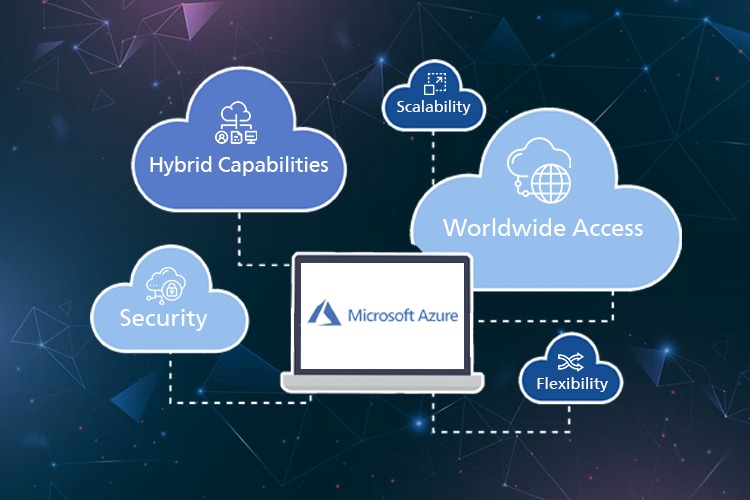
Infrastructure architecture shapes recovery time more than any other single factor. Organizations that still rely on on-premises servers as their primary or sole computing environment face longer recovery times than those with cloud-based or hybrid infrastructure, because physical hardware replacement or restoration takes time that cloud provisioning does not. Cloud migration services for Michigan businesses that move workloads to modern cloud environments also typically improve the recovery time objective — not as a side benefit, but as a direct consequence of how cloud platforms are architected.
The businesses in Michigan that have survived ransomware incidents, equipment failures, and natural disasters with minimal operational impact share a common characteristic: they tested their recovery process before they needed it. Testing reveals the gaps — the backup that is not restoring correctly, the recovery procedure that requires a software license nobody can find, the network configuration that has changed since the plan was written. Finding these gaps in a planned test is dramatically less expensive than discovering them during an actual incident.
Recovery planning that is reviewed quarterly, tested annually, and updated when business systems change converts a compliance document into operational insurance. For Michigan SMBs, that is a meaningful difference.
To learn more about how Leet can help your Rochester Hills business build and verify a genuine disaster recovery capability, reach out to their team to discuss your current backup and continuity posture.
About the Author