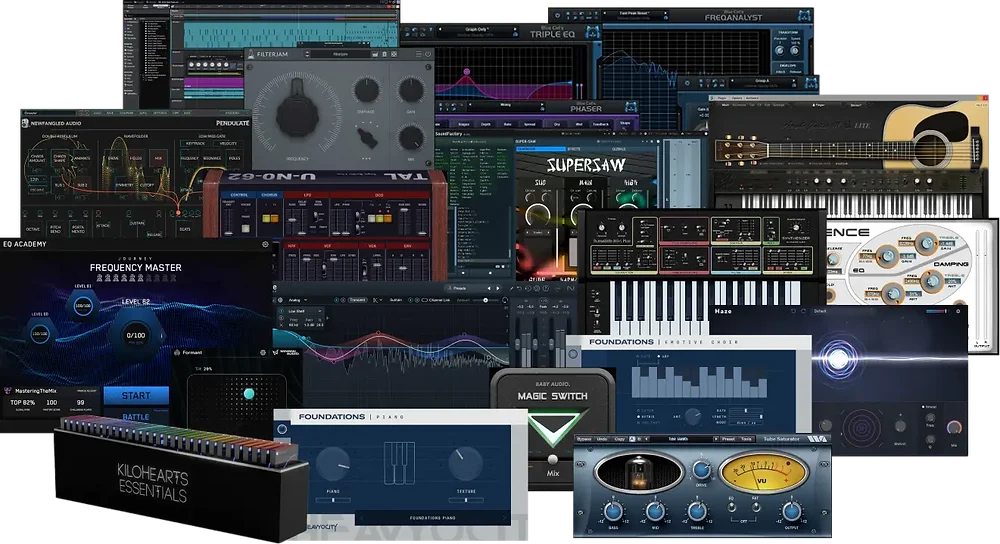
Electronic music production relies heavily on the digital instruments and effects available in your audio workstation. While stock tools are fantastic for learning the basics of signal flow and arrangement, advanced sound designers eventually crave something more robust. Creating aggressive textures, metallic tones, and massive harmonic walls requires tools built specifically for those extremes. This is exactly where experimental audio processors step into the spotlight.
Instead of relying on standard wavetable or subtractive methods, modern producers are exploring unconventional synthesis techniques. Independent developers are now creating high-performance tools that utilize multi-band frequency modulation, harmonic sculpting, and spectral resynthesis. These modern tools demand a lot of processing power, but the sonic payoff is immense.
If you want to move beyond the traditional boundaries of electronic music, you need to rethink your approach to sound generation. By integrating specialized synthesis engines and predictive sequencing into your workflow, you can craft audio that stands completely apart from the crowd.
The Evolution of the Software Synthesizer
For years, the goal of digital audio development was to perfectly emulate classic analog hardware. Developers spent countless hours modeling voltage-controlled oscillators, ladder filters, and bucket-brigade delays. While these emulations provide nostalgic warmth, they inherently limit producers to the sounds of the past.
Recently, the focus has shifted toward building a Software Synthesizer that does what hardware simply cannot do. Instead of looking backward, independent creators are coding instruments that generate futuristic, complex waveforms. This shift has given rise to a new generation of audio tools designed specifically for experimental sound design. These instruments leverage the immense processing power of modern computers to calculate massive amounts of harmonic data in real time.
The result is a class of instruments that specializes in digital aggression and complexity. Rather than smooth, analog-style pads, these tools excel at generating tearing metallic leads, unpredictable glitches, and rich, evolving atmospheres.
Breaking Boundaries With Spectral Synthesis
One of the most exciting developments in modern audio production is the rise of spectral synthesis. Traditional subtractive methods start with a rich waveform and use filters to remove frequencies. Spectral instruments operate differently, giving you direct control over individual harmonics and partials.
Multi-Band Frequency Modulation
Frequency modulation is famous for creating bell-like, metallic sounds. When you take this concept and apply it across multiple distinct frequency bands, the results become exponentially more complex. Extreme multi-band FM engines allow you to modulate the high, mid, and low frequencies independently. This level of control lets producers craft sounds that constantly shift and evolve without ever becoming muddy.
Harmonic Sculpting and Resynthesis
Spectral resynthesis takes an existing audio signal and breaks it down into its fundamental harmonic components. From there, you can manipulate the sonic DNA of the sound. You can stretch the time without altering the pitch, smear the transients, or isolate specific overtones to create entirely new textures. High-performance plugins designed for this task give sound designers an unprecedented level of precision when crafting their signature sounds.
Rhythm Design Using Predictive Sequencers
Rhythm is the backbone of electronic music, but programming drum patterns on a standard piano roll can quickly become tedious. To create motion and groove that feels alive, producers are turning to advanced sequencer tools. These are not your standard step sequencers; they are complex pattern-generating engines designed to introduce controlled chaos into your tracks.
Predictive and pattern-based sequencers analyze the rhythmic structures you input and intelligently suggest or generate variations. By using wave-transient-predictive algorithms, these sequencers can map out intricate percussive elements that constantly morph over time.
Animated synthetic motion is crucial for keeping listeners engaged. When a sequencer automatically shifts the velocity, panning, and micro-timing of your hi-hats or percussion loops, it injects a human-like unpredictability into a rigid digital environment. This approach allows producers to focus on the overarching groove while the software handles the intricate rhythmic details.
Sculpting Low-End With Advanced Bass Synths
The foundation of any powerful electronic track is its low-end. Standard sub-basses get the job done, but experimental genres require bass sounds with incredible weight and texture. Advanced bass instruments are built specifically to tackle this challenge using highly specialized digital techniques.
Infrasound Folding
To create bass patches that rattle club speakers, developers utilize infrasound folding. This process takes extremely low frequencies—often below the threshold of human hearing—and folds them back into the audible spectrum. This generates thick, buzzing overtones that add grit and presence to a sub-bass without sacrificing its fundamental weight.
Heterodyning Techniques
Heterodyning involves combining two high-frequency signals to create a new, lower frequency based on the difference between the two originals. When applied to drum and bass synthesis, this technique yields incredibly punchy and alien-sounding transients. Instruments built around these concepts are essential for producers looking to craft hard-hitting, aggressive rhythm sections that cut right through a dense mix.
Taking Advantage of Free VST Plugins
Building a highly specialized library of production tools does not necessarily require a massive financial investment up front. Many independent developers offer a free tier of their software to help new users experience their unique approach to sound design.
Exploring free VST plugins is an excellent way to test how CPU-intensive instruments interact with your specific computer setup. Because experimental synthesizers calculate complex math in real time, they can quickly max out a processor. Downloading free or trial versions allows you to evaluate the performance and stability of these tools within your digital audio workstation.
Furthermore, free utilities and effects provide a risk-free opportunity to experiment with unconventional processing. By incorporating these free tools into your workflow, you can begin to grasp the concepts of spectral sculpting and predictive sequencing before committing to a full purchase.
Elevate Your Electronic Music Production
Stepping away from traditional sound design techniques is the fastest way to develop a unique sonic identity. By integrating specialized software instruments into your sessions, you open the door to massive harmonic walls, complex digital textures, and driving, unpredictable rhythms. Start by downloading a few experimental tools, test how they impact your workflow, and push the boundaries of what your digital audio workstation can achieve. Explore independent developers today to find the exact tools you need to take your tracks to the next level.
About the Author