Glaucoma Screening
Key Takeaways
- Glaucoma can develop slowly, often without noticeable symptoms at first.
- A complete glaucoma evaluation uses several tests, not just an eye-pressure check.
- Age, family history, ethnicity, certain medical conditions, eye injury, and steroid use can affect risk.
- Early treatment can help protect remaining vision, but it cannot restore vision already lost to glaucoma.
- Consistent follow-up and proper use of prescribed treatment are central to long-term care.
Glaucoma is a group of eye diseases that damages the optic nerve, the connection that carries visual information from the eye to the brain. Because the damage is often gradual and painless, many people do not realize anything is wrong until their side vision has already changed. For people comparing treatment options, glaucoma surgery may be part of a broader care plan when medication or laser treatment is not enough to control eye pressure. Jenkins Eye Care provides glaucoma information, testing, and treatment guidance for patients in Honolulu and across Hawaii, including evaluation with optic nerve imaging, visual field testing, pressure measurement, and other tools used to monitor this complex condition.
Why Glaucoma Can Be Hard to Notice
Open-angle glaucoma, the most common form, frequently begins without pain, redness, or obvious blurry vision. Early damage often affects peripheral vision, meaning a person may still read, drive, and recognize faces well while missing objects near the edges of their visual field. For example, someone may feel that their sight is normal but begin bumping into objects, failing to notice a person standing nearby, or having more trouble seeing cars or pedestrians approaching from the side. By the time these changes are noticeable, optic nerve damage may already be significant. That is why waiting for symptoms is not a reliable screening strategy.
Who May Face a Higher Risk?
Having a risk factor does not mean someone will develop glaucoma. It does mean that regular comprehensive eye examinations may be especially important. Risk also varies by glaucoma type. Open-angle glaucoma and angle-closure glaucoma have different patterns, warning signs, and treatment needs.
- Age over 60, with risk rising as people get older.
- A parent, sibling, or child with glaucoma.
- Black or African American heritage, particularly at younger ages.
- Hispanic or Latino heritage, especially later in life.
- Diabetes, high blood pressure, or other vascular health concerns.
- Elevated eye pressure, thin corneas, or certain optic nerve features.
- Previous eye trauma, severe nearsightedness, or an eye with a narrow drainage angle.
- Long-term use of steroid medications, including some eye drops, inhalers, creams, or oral medicines.
For an overview of glaucoma symptoms, risk factors, diagnosis, and treatment, the National Eye Institute’s glaucoma guide offers a useful patient-focused resource.
What Happens During a Glaucoma Evaluation?
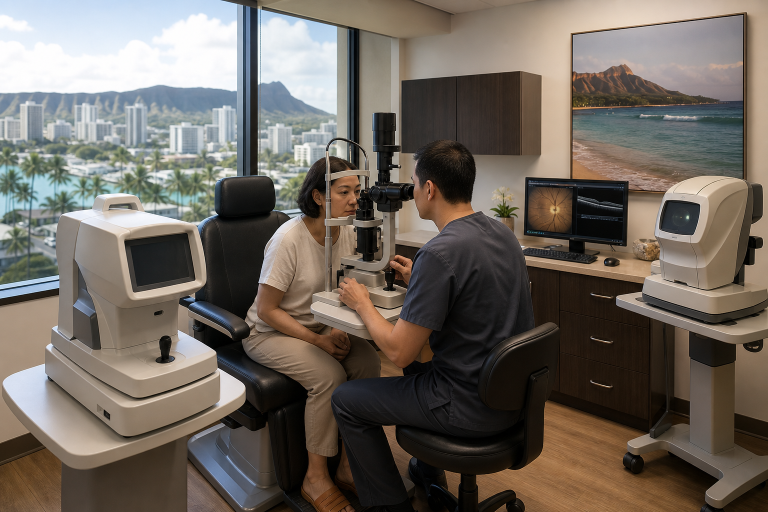
There is no single test that can diagnose every case of glaucoma. Instead, an eye doctor combines measurements, images, and repeated examinations to understand whether the optic nerve is healthy and stable over time.
- Eye pressure measurement: Also called tonometry, this checks the pressure inside the eye.
- Optic nerve examination: The doctor evaluates the nerve at the back of the eye for signs of damage.
- Visual field testing: This measures side vision and can identify blind spots a person may not notice.
- Optical coherence tomography: OCT imaging creates detailed scans of the optic nerve and surrounding nerve fiber tissue.
- Gonioscopy: This allows the doctor to examine the drainage angle inside the eye.
- Pachymetry: Corneal thickness is measured because it can influence how eye-pressure readings are interpreted.
- Dilated eye examination: Dilating drops provide a wider view of the optic nerve and retina.
Why Normal Eye Pressure Does Not Tell the Whole Story
High eye pressure is an important risk factor, but it is not the entire story. Some people have elevated pressure without optic nerve damage, while others develop glaucoma even when their pressure falls within a typical range. This is sometimes called normal-tension glaucoma. Doctors interpret pressure alongside corneal thickness, optic nerve appearance, OCT scans, visual field results, and prior records. A single normal result can be reassuring, but long-term comparisons are often more informative than a single appointment.
How Doctors Decide What Happens Next
A person may be described as a glaucoma suspect when there is an elevated risk or an uncertain finding, such as higher pressure, a suspicious-looking optic nerve, or an unusual visual field result. This does not always mean confirmed glaucoma. Repeat testing may be needed to see whether a true pattern of damage is present. If treatment is needed, options may include prescription eye drops, laser procedures, or surgery. The best approach depends on the type of glaucoma, pressure level, degree of optic nerve damage, medication tolerance, daily routine, and overall health. The goal is to lower pressure enough to reduce the risk of further damage, not to reverse vision already lost.
Where Surgery May Fit Into Care
Surgery is not automatically the first step. It may be considered when pressure remains above a safe target, eye drops cause adverse effects, medication schedules are difficult to maintain, or testing shows continued progression. Laser treatments can improve fluid drainage, while minimally invasive procedures, filtering surgery, or drainage devices may be used in selected situations. Each option has benefits, limitations, risks, and recovery requirements to discuss with an eye specialist.
Daily Habits That Support Eye Health
Lifestyle habits cannot guarantee the prevention of glaucoma or replace professional care. They can support overall health and make it easier to follow a treatment plan.
- Use prescribed eye drops exactly as directed, and ask for help if the technique is difficult.
- Keep follow-up appointments even when vision seems unchanged.
- Exercise regularly when approved by a health professional.
- Manage diabetes, blood pressure, and cholesterol levels.
- Avoid smoking and wear protective eyewear during sports, work, and home projects.
- Wear sunglasses that block UVA and UVB rays.
- Tell every healthcare provider about glaucoma medicines before starting a new drug.
People with diabetes should also prioritize regular eye care and blood sugar management. The CDC’s guide to diabetes and vision loss explains how diabetes can affect eye health and why early examinations matter.
When Eye Symptoms Need Prompt Attention
Sudden symptoms can signal an urgent eye problem, including angle-closure glaucoma or a retinal condition. Seek urgent medical care rather than waiting for a routine appointment if you develop severe eye pain, a red, painful eye, rapid vision loss, halos around lights with nausea or headache, sudden side-vision loss, new flashes or floaters, or a curtain-like shadow across vision.
Questions to Ask at an Eye Appointment
- Do my results show glaucoma, or only a higher risk?
- How do my optic nerve images compare with previous scans?
- What does my visual field test show?
- How often should I return for testing?
- What are the benefits and possible side effects of each treatment?
- Could another medication or health condition affect my eye pressure?
- Which symptoms should lead me to seek urgent care?
Make Regular Eye Care Part of the Plan
Glaucoma care depends on awareness, careful testing, and steady follow-up. Do not wait for pain or blurry vision before scheduling an eye examination, especially if you have personal risk factors or a family history of glaucoma. Online information cannot diagnose an eye condition, but asking informed questions and keeping regular appointments can help protect useful vision for years to come.
Conclusion
Glaucoma management starts with understanding your risk, receiving accurate testing, and following a personalized treatment plan. Because vision loss from glaucoma is often permanent, early detection and consistent monitoring are essential for protecting the sight you still have. Regular comprehensive eye exams allow doctors to track changes, adjust treatment when needed, and identify problems before significant damage occurs. Whether care involves prescription medications, laser procedures, or glaucoma surgery, the goal is the same: to maintain healthy eye function and slow disease progression. By staying informed, following medical recommendations, and keeping scheduled appointments, patients in Honolulu and across Hawaii can take an active role in preserving their long-term vision and quality of life.
About the Author