Industrial Robot Motors
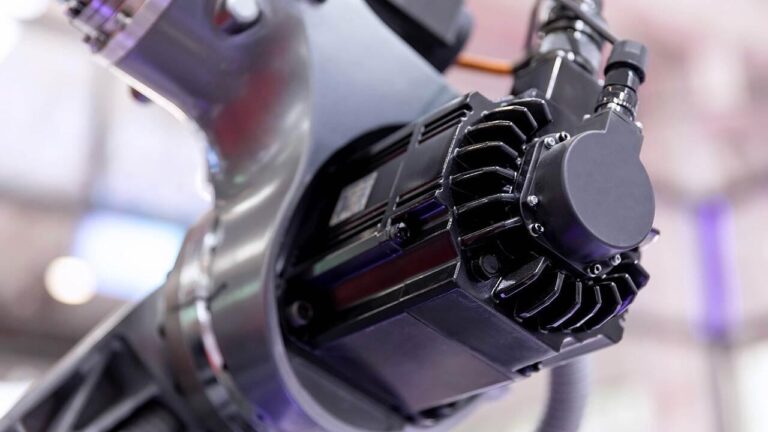
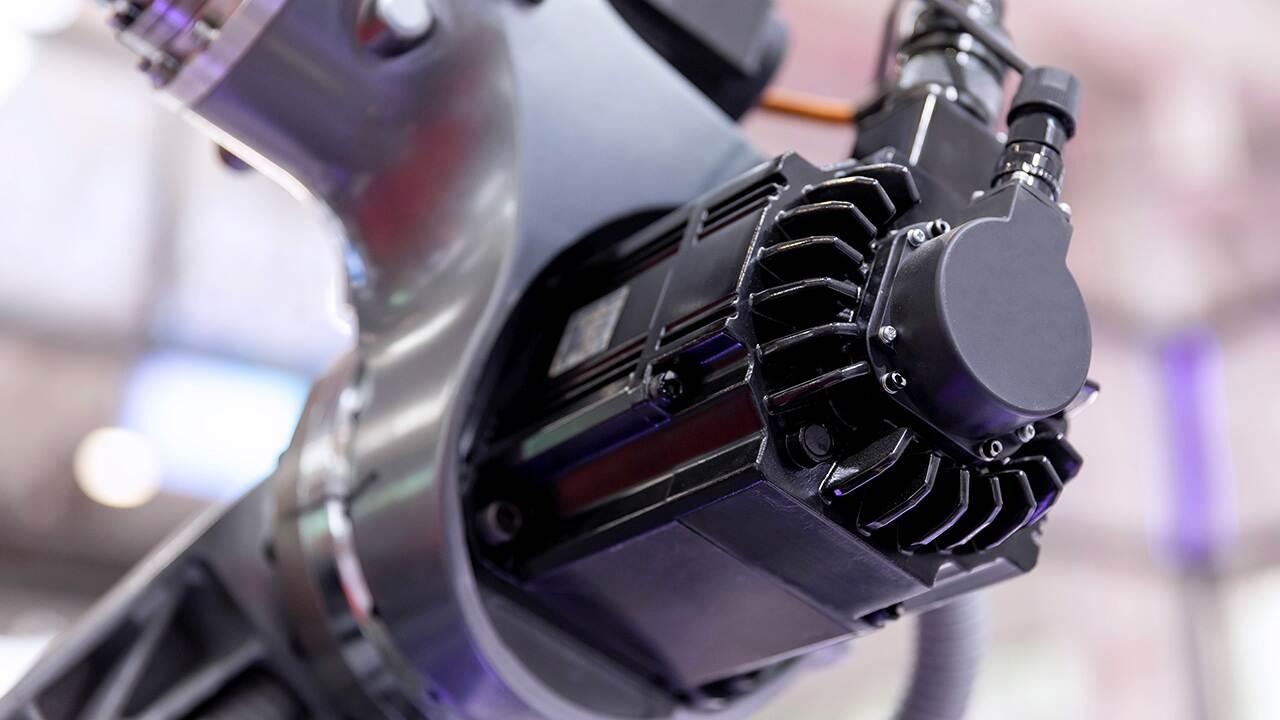
Industrial Robot Motor is essential in automation because they drive robot arms, collaborative robots, and machine precision. The effectiveness of industrial functions is based on their performance, accuracy and reliability. The Hall sensor is one of the most important components that guarantee accurate functioning in such motors. Hall sensors will supply real-time information on the rotor position and motor speed to enable commutating and deliver the correct torque. It is important that engineers and manufacturers who are going to choose motors for industrial use know their role.
How Hall Sensors Enhance Motor Commutation
Commutation refers to the act of moving current to the windings of a motor so as to cause it to rotate. In brushless DC (BLDC) motors, which are found in most industrial robots, correct commutation is critical for the enhancement of effective, smooth running. Hall sensors are used to detect the magnetic field of the rotor and give electrical signals that signal the position of the rotor. These signals enable the motor controller to know the precise time when to switch the current between phases. The inclusion of the Hall sensors allows commutation to operate on open-loop control or sensorless algorithms, leading to decreased torque efficiency, higher vibration and lower positioning accuracy. This level of control is especially important in the industrial robot application, where precision and repeatability are a necessity. Hall sensors fitted to motors are capable of stable rotation even when the load varies, and the error in trajectory and speed is reduced.
Contribution to Position and Speed Accuracy
The hall sensors not only help in guiding the commutation, but also offer very important feedback on motion control. They make it possible to monitor angular displacement and rotational velocity accurately because of the ability to detect rotor position with accuracy. This positional data is necessary for robotic arms that have repetitive duties or entail high-accuracy motions. One example is the assembly robots, the CNC machines, and the pick and place robots, which require precise motor feedback in order to perform repeatedly without deviation. Limited to repeatable performance. Integrated Hall sensors would support a closed-loop control system, as the controller can adjust the current dynamically based on the rotor position. This feedback mechanism enhances the speed control and the torque control. Motors without Hall sensors may rely on estimation algorithms to determine the rotor position, and this may result in a latency as well as a lack of responsiveness, particularly at low speeds. Therefore, in high-fidelity motion control, the Hall sensors are important.
Impact on Motor Efficiency and Heat Management
Motors used in industrial robotics often work in the condition of continuous or high-duty-cycle conditions. Productivity is an issue of concern. Hall sensors also help to optimize the commutation timing to ensure that current flows in the rotor only at the point of matching the magnetic poles of the stator with the poles in the rotor.
- Optimized Commutation Timing
Timing ensures minimization of energy loss and enhancement of the electromagnetic efficiency. When switching off, the current is well synchronized, and the motor gives a smoother torque with fewer ripples.
- Thermal Performance and Longevity
Minimized energy waste specifically restricts the generation of heat. Overheating reduces the insulation life, causes mechanical wear, and reduces the life of the motors. Hall sensors allow for ensuring stable operating temperatures and even torque output by enhancing the precision of commutation.
This benefit is especially apparent in small, high-torque-density motors in collaborative robots or those where space is limited, such as space joints. As an example, CubeMars industrial robot motors incorporate Hall sensors to enable them to have superior thermal control whilst still having smooth and powerful output within restricted-sized mechanical envelopes.
Supporting Multi-Mode Control and Robotics Flexibility
Industrial robot motors often operate under multiple control strategies. Depending on the task, a motor may switch between position control, velocity control, and torque control.
- Adaptive Control Modes
Precise torque modulation in these scenarios depends on accurate rotor position and speed data. Hall sensors provide the reliable feedback required for smooth transitions between control modes. In collaborative robots, this allows safe human-robot interaction and controlled force output.
- Coordinated Multi-Axis Motion
On automated production lines, multiple motors frequently operate in synchronized motion. Hall sensor feedback ensures consistent timing across axes, supporting coordinated movement without misalignment or oscillation. Stable feedback signals reduce the risk of positioning errors that could affect production quality.
Enhancing Durability and Maintenance
In addition to accuracy and efficiency, Hall sensors also help indirectly in the durability of the motor. Commutation and position feedback can be done accurately to minimize mechanical stress, as it makes the motion smooth. Positionless motors may have torque ripple or other sudden jerks, which wear out bearings, shafts, and gear trains. Hall sensors contribute to the prolongation of the working life of robot motor systems in industries by reducing the number of mechanical stresses caused by the effects of the apparatus. Also, Hall sensors facilitate diagnostics and preventive maintenance. Motor controllers are able to measure rotor performance and identify a fault, which can be a bad fit, too much vibration or broken sensors. To enhance operational costs and uptime, early detection enables the operators to do maintenance before the critical components break, and this leads to higher uptime.
Conclusion
Hall sensors are utilized in industrial robot motors, an important part of which is to ensure accurate commutation, motion control and efficiency through critical feedback of rotor positions and speed. They are used in conjunction with closed-loop control systems, which provide torque accuracy, boosted rotation and positional accuracy. In addition to performance, Hall sensors are useful in thermal control, mechanical stress minimization, and preventive maintenance. In industries that require high reliability, compactness and multi-mode motor control, Hall sensors in motors have apparent benefits over sensor less types. CubeMars industrial robot motors are a good example of this integration by providing smooth, powerful, and efficient operation in a large variety of robotics tasks. The use of Hall sensors makes industrial robots stable, precise and durable in operation to meet the harsh needs of automation today.
About the Author