unicycle hero
Introduction to Unicycle Hero
Unicycle Hero is one of those games that looks deceptively simple at first glance, but within minutes, it reveals just how demanding, clever, and addictive it really is. At its core, the game combines the awkward elegance of balancing on a unicycle with the competitive intensity of Olympic-style athletic events. That unusual mix is exactly what helped Unicycle Hero stand out in a crowded mobile and casual gaming market.
What makes Unicycle ero particularly interesting is how it embraces imperfection. The character you control isn’t a flawless athlete performing smooth, realistic animations. Instead, the movement is intentionally clumsy, exaggerated, and physics-driven. This design choice creates a constant sense of tension, humor, and challenge that keeps players coming back, even after repeated failures.
The game gained traction largely through word of mouth, social media clips, and streamer reactions. Watching someone struggle to stay upright while attempting to throw a javelin or lift weights on a unicycle is inherently entertaining. That “easy to watch, hard to master” quality gave Unicycle Hero a strong identity among physics-based sports games.
Over time, Unicycle Hero has evolved from a quirky concept into a surprisingly deep experience. Beneath the laughs and chaotic movement lies a game that rewards timing, precision, patience, and strategic upgrades. It’s not just about staying upright; it’s about mastering momentum, understanding physics, and learning how to fail productively.
The Core Gameplay Mechanics Explained in Detail
At the heart of Unicycle Hero is a physics-based control system that demands constant attention. Players control a unicyclist who must balance while performing a variety of athletic events. The controls are intentionally minimal, usually involving tapping, holding, or adjusting balance at just the right moment. However, that simplicity is deceptive, because small mistakes quickly snowball into dramatic wipeouts.
Balancing is the foundation of every action in the game. Whether you’re preparing to throw a discus or trying to lift a heavy barbell, maintaining stability on the unicycle is crucial. The game uses exaggerated physics to punish overcorrection and reward subtle adjustments. Lean too far forward or backward, and your athlete will tumble in a way that feels both frustrating and hilarious.
Each event introduces slight variations in how balance interacts with performance. For example, throwing events require careful timing to maximize distance while preventing a fall. Strength-based challenges emphasize posture and rhythm rather than raw speed. This variety keeps the gameplay fresh and forces players to adapt rather than rely on a single technique.
Progression in Unicycle Hero is structured around improvement rather than instant success. Early attempts often end in failure, but each run provides experience points or currency that can be used to upgrade your character. This loop of attempt, fail, upgrade, and retry creates a satisfying sense of growth, even when you’re still struggling to stay upright.
Athletic Events That Turn Chaos into Skill
One of the standout features of Unicycle Hero is its diverse lineup of athletic events. While traditional sports games focus on realism and precision, Unicycle Hero leans into chaos without abandoning skill-based gameplay. Every event feels familiar on paper but wildly unpredictable in execution.
Throwing events like javelin and discus are particularly memorable. You must balance the unicycle, wind up your throw, and release at the perfect moment. Too early or too late, and the result is either a weak toss or a complete loss of balance. Mastering these events requires learning how momentum transfers through the character’s body.
Strength-based challenges such as weightlifting add another layer of difficulty. Instead of rapidly tapping or holding a button, players must maintain balance while slowly lifting heavier weights. The unicycle wobbles under pressure, and even slight miscalculations can cause failure. These events reward patience and controlled movement rather than aggressive inputs.
Speed and endurance challenges also make appearances, forcing players to maintain balance over longer periods. These events are less about explosive action and more about consistency. Staying upright for extended durations can be surprisingly exhausting, especially as the game subtly increases difficulty with each attempt.
Together, these events form a well-rounded experience that keeps Unicycle Hero from feeling repetitive. Each discipline tests a different aspect of the player’s skill set, ensuring that success comes from understanding the game’s mechanics rather than memorizing patterns.
Progression Systems and Character Upgrades
Progression in Unicycle Hero is thoughtfully designed to encourage long-term engagement. Instead of unlocking new characters or cosmetic items right away, the game focuses on improving your athlete’s abilities through upgrades. These upgrades directly affect performance, making them feel meaningful rather than superficial.
Players earn currency by completing events, even if the result isn’t perfect. This ensures that failure still feels productive. Over time, these earnings can be invested in attributes like balance, strength, speed, and endurance. Each upgrade subtly shifts how the character responds to player input.
What’s particularly clever is how upgrades don’t remove challenge entirely. Even a fully upgraded character can still fall over if the player loses focus or mistimes an action. The upgrades make success more achievable, but they never replace skill. This balance keeps the game challenging without becoming unfair.
The progression curve is intentionally gradual. Early upgrades provide noticeable improvements, which helps new players feel encouraged. Later upgrades require more investment and offer smaller gains, emphasizing mastery over raw stats. This structure ensures that Unicycle Hero remains engaging for both casual players and those seeking a deeper challenge.
By tying progression closely to gameplay performance, the game reinforces its core theme: improvement comes from persistence, practice, and learning from mistakes.
Visual Style and Animation Choices
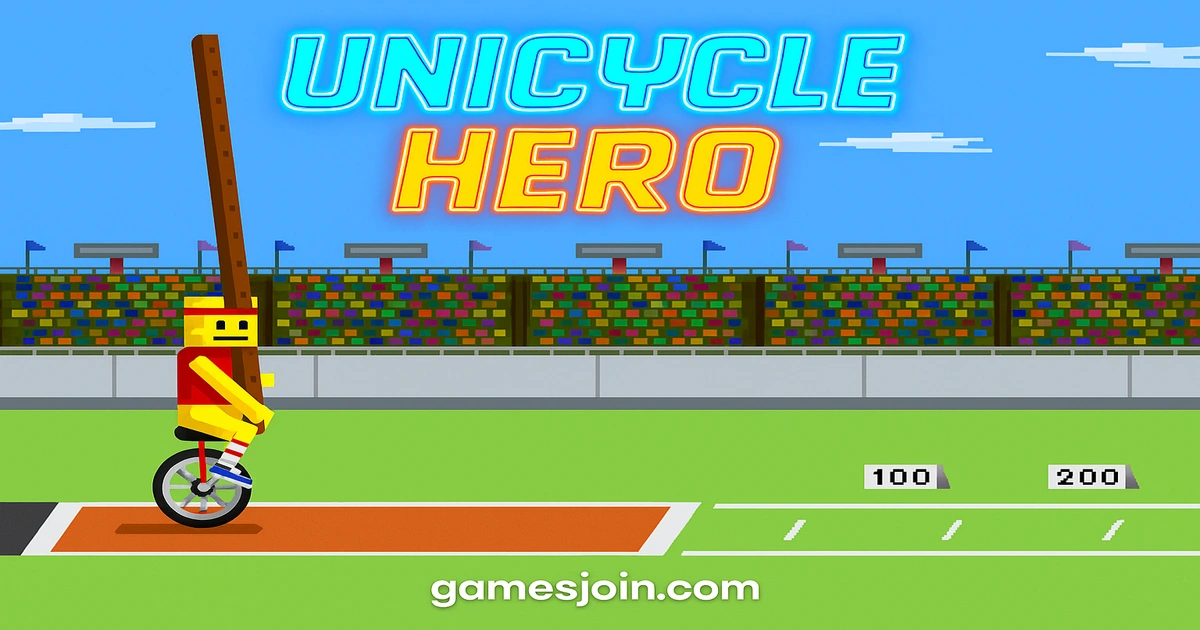
Unicycle Hero’s visual presentation is simple but highly effective. The character designs are intentionally exaggerated, with floppy limbs and expressive movements that emphasize the absurdity of balancing athletic feats on a unicycle. This art style complements the physics-driven gameplay perfectly.
Animations play a crucial role in communicating feedback to the player. When the unicycle begins to wobble, the character’s posture changes in a clear and readable way. This visual feedback helps players anticipate failure and attempt corrections, even if those corrections don’t always work as planned.
The environments are minimalistic, keeping the focus on the athlete and the event. Backgrounds rarely distract from gameplay, which is a smart choice given how much concentration balance requires. The simplicity also ensures that performance remains smooth across devices.
Despite its cartoonish appearance, the game maintains a consistent visual identity. Nothing feels out of place or rushed. Every animation, from triumphant throws to dramatic falls, reinforces the game’s tone: lighthearted, challenging, and unapologetically silly.
Sound Design and Its Role in Player Immersion
Sound design in Unicycle Hero is subtle but impactful. Instead of overwhelming players with constant music or loud effects, the game uses audio cues strategically to enhance immersion. Small sounds accompany shifts in balance, successful throws, and inevitable crashes.
The music, when present, is understated and rhythmic. It supports gameplay without demanding attention. This is especially important in a game where timing and focus are critical. Overly aggressive music could easily become distracting, but Unicycle Hero avoids that trap.
Impact sounds during falls are exaggerated just enough to be humorous without becoming annoying. These audio cues reinforce the game’s comedic tone while also signaling failure clearly. You always know when you’ve made a mistake, even if it’s not immediately visible on screen.
Overall, the sound design works in harmony with the visuals and physics. It enhances the experience without overshadowing the core mechanics, which is exactly what a game like this needs.
Why Unicycle Hero Is So Addictive
Unicycle Hero’s addictive quality comes from its perfect balance of frustration and reward. Each attempt feels like it could be the one where everything finally clicks. Even when you fail repeatedly, the game never feels impossible or unfair.
The short session structure also plays a role in its appeal. Individual attempts are quick, making it easy to say “just one more try.” Before long, minutes turn into hours as players chase slightly better results and incremental improvements.
Another factor is the game’s transparency. When you fail, it’s usually clear why. You leaned too far, released too early, or lost focus for a split second. This clarity encourages learning rather than rage quitting.
Finally, the humor inherent in the game’s physics makes failure enjoyable. Watching your unicyclist tumble in slow motion can be just as entertaining as landing a perfect throw. That ability to laugh at mistakes is a big reason players stick around.
Community Reception and Cultural Impact
Unicycle Hero has built a quiet but dedicated fan base. While it may not dominate mainstream gaming headlines, it has earned respect within the physics-based and casual gaming communities. Players often share clips of spectacular failures and unexpected successes online.
Streamers and content creators have also contributed to the game’s popularity. The unpredictable nature of the gameplay makes it ideal for live reactions, where viewers can enjoy both triumphs and disasters in real time. This organic exposure helped the game reach audiences beyond traditional mobile gamers.
The game’s design philosophy has influenced similar titles that embrace awkward movement and physics-driven humor. Unicycle Hero demonstrated that games don’t need hyper-realistic graphics or complex narratives to be compelling. Sometimes, a strong core mechanic and clear identity are enough.
In that sense, Unicycle Hero represents a broader shift toward experimental, personality-driven game design. It celebrates imperfection and challenge in a way that feels refreshing.
Tips for Mastering Unicycle Hero
Mastery in Unicycle Hero comes from patience rather than brute force. New players often try to overcorrect balance issues, which usually makes things worse. Learning to make small, deliberate adjustments is key.
Timing is another crucial skill. Whether you’re throwing or lifting, waiting for the right moment often matters more than reacting quickly. Observing the character’s movement and anticipating momentum leads to better results.
Upgrades should be chosen strategically. Investing too heavily in one stat while ignoring others can create new problems. A balanced approach tends to produce more consistent performance across events.
Most importantly, embrace failure. Every fall teaches something, even if it’s just a reminder to stay calm. Players who approach the game with curiosity rather than frustration tend to improve faster and enjoy the experience more.
Conclusion:
Unicycle Hero succeeds because it knows exactly what it wants to be. It doesn’t chase realism or complexity for its own sake. Instead, it focuses on delivering a unique, memorable experience built around physics, humor, and skill-based progression.
The game’s charm lies in its honesty. It doesn’t pretend to be easy, and it doesn’t hide its mechanics behind flashy visuals. What you see is what you get, and that transparency builds trust with players.
Even after many hours, Unicycle Hero remains engaging because improvement always feels possible. There’s always a slightly better throw, a cleaner lift, or a longer balance to achieve. That endless pursuit of marginal gains is deeply satisfying.
About the Author